Why team-based models?
In team-based school staffing models, educators work together to support a shared roster of students. In addition to helping educators better meet the needs of learners, teams create opportunities for new educator roles. Novice educators receive coaching and guidance, while experienced educators move into leadership roles, leading teams while still working directly with students. Learn more.
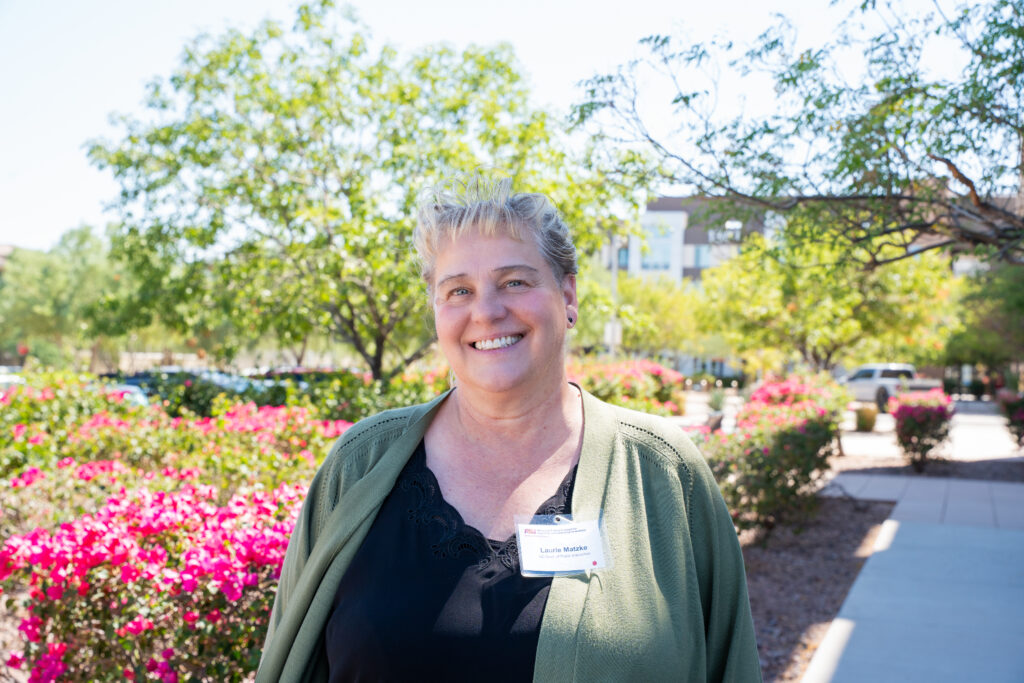
Laurie Matzke is no stranger to phone calls, but the one that came in late August was different. After three years of planning and partnership, and more than three decades in public education, she learned that North Dakota had become the first state in the nation to be approved by the U.S. Department of Labor for a new Lead Teacher Registered Apprenticeship.
“It was such a relief,” Matzke recalls. “Everything is finally coming together.”
For Matzke, the call marked both a professional milestone and a new chapter for the North Dakota Department of Public Instruction, where she serves as the chief of program development and growth. The new Lead Teacher Registered Apprenticeship builds on the state’s pioneering efforts, including the nation’s first Principal Registered Apprenticeship in 2023, and further strengthens North Dakota’s education workforce pipeline.
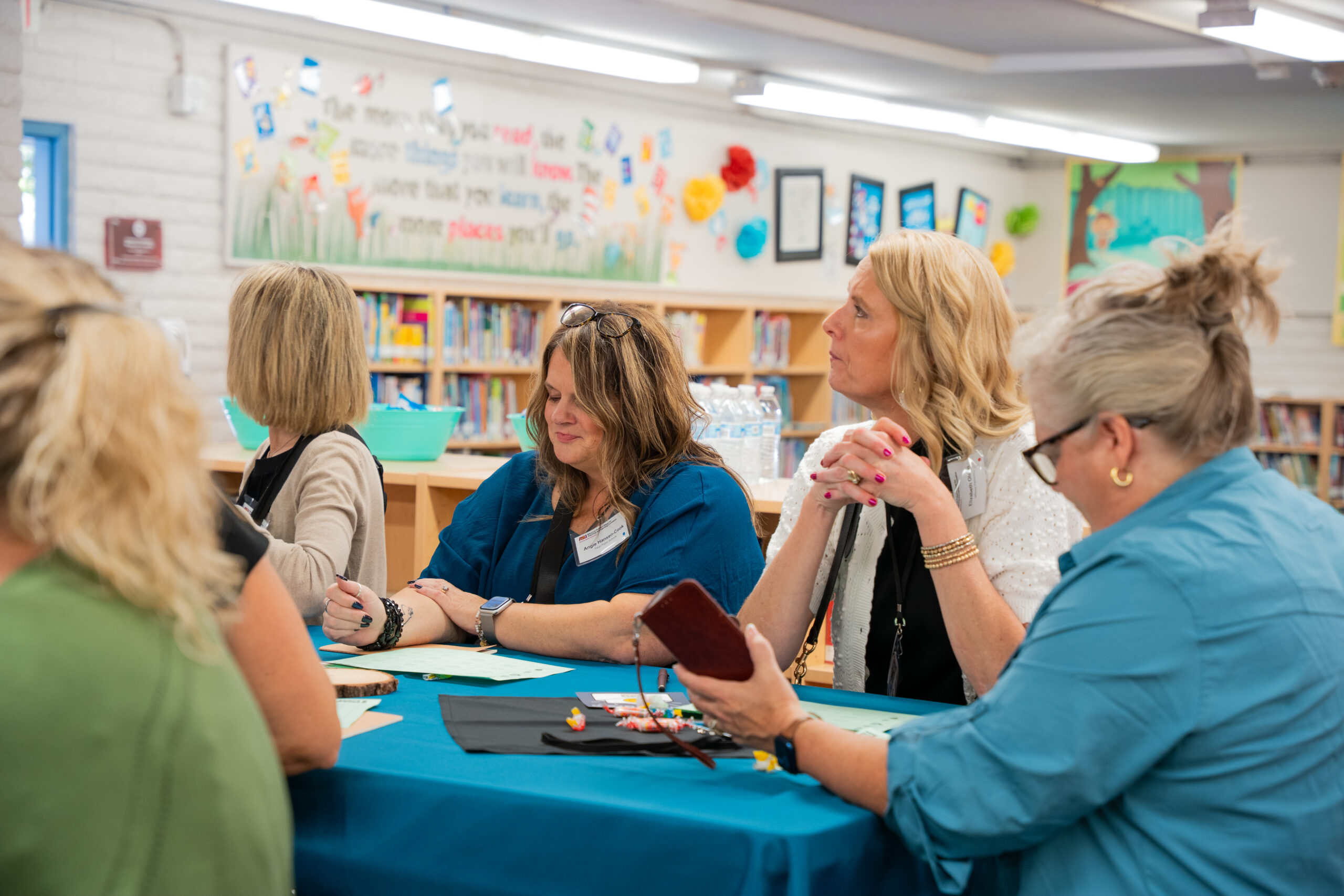
This call was also an exciting turning point. Just a few weeks later, in September, Matzke led a group of educators and school and system leaders from North Dakota on a Site Visit to Arizona to observe and learn from Lead Teachers and others who are several years into implementing team-based strategic school staffing models.
The visit, and the new Lead Teacher Registered Apprenticeship program, were made possible by a new partnership between the North Dakota Department of Public Instruction and Arizona State University’s Next Education Workforce™ initiative, with support from the National Center for Grow Your Own.
A new vision for school staffing
North Dakota’s journey to strategic school staffing models and the Lead Teacher Registered Apprenticeship program began three years ago when former State Superintendent Kirsten Baesler brought a group of legislators, educators and superintendents — including Matzke — to Arizona to see team-based models in action.
“We just fell in love with the model,” Matzke says. “Everything we do is student-centered. We just want to make sure that all of our students feel supported, that they can go on after graduation to be successful. We see the Next Education Workforce model as a perfect fit in North Dakota and for helping us address the teacher shortage and helping our students graduate ‘choice ready’ with the knowledge, skills and dispositions to be successful.”
As Matzke explains it, North Dakota is going through “a pretty dire teacher shortage.” In a meeting this past February, the state’s Education Standards and Practices Board declared all content areas as critical shortage teaching positions for the 2025–26 school year.
Student-centered innovation in North Dakota

Educators in North Dakota have taken steps to implement personalized learning innovations that aim to improve outcomes for every student.
At Jefferson Elementary School, a Title I school in Fargo serving about 300 students, educators have already implemented “needs-based learning.”
“I feel passionate that our students and educators at Jefferson deserve what’s best, and I feel like this model is something we definitely needed to take a very close look at,” says Principal Beth Olson, who participated in the Arizona training. “Anytime you can develop a system of support where teachers are working collaboratively for the betterment of student education, I think that’s a very big positive.”
Missy Eidsness, the Associate Superintendent for Fargo Public Schools, who oversees all elementary schools in the district, agreed. The system, she says, will pilot team-based models in two elementary schools and one middle school in the 2025-26 school year because it’s looking to improve both outcomes for students and experiences for educators.
“We’re always looking to personalize learning for our students as we go forward,” Eidsness says. “One of the pieces that we believe in is that we want our students ‘owned’ by several adults in the building, not just a single teacher. We don’t want someone to slip through the cracks, and by having a more collaborative efficacy with our teachers, we know that the students will benefit.”
Seeing teams in action at Stevenson
While Eidsness knows meaningful change doesn’t happen overnight, her visit to Arizona left her feeling inspired. Watching teams of teachers collaborate, share responsibility and celebrate student growth gave her a clear picture of what’s possible as Fargo Public Schools moves forward with its own efforts.
At Stevenson Elementary, Lead Teachers Taylor Murphy and Tara Spielberger shared about their journey with team-based models.
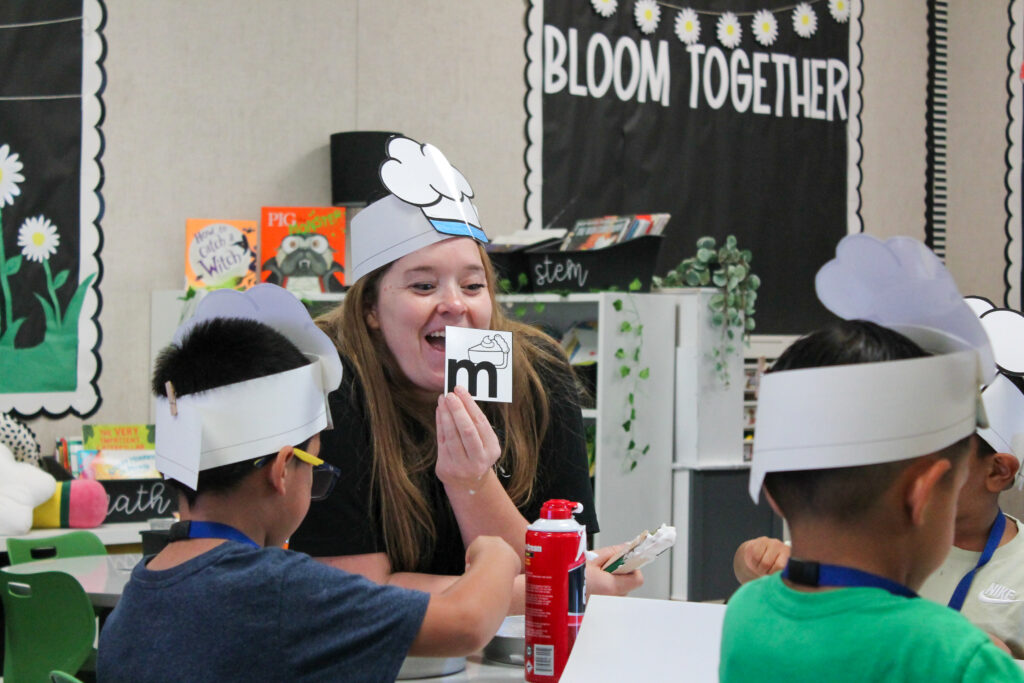
In her 14th year of teaching, Murphy serves as Stevenson’s kindergarten lead teacher.
“As teachers, we naturally constantly have this pressure of perfection. I absolutely felt that in a one-teacher, one-classroom model. I had to be everything for everyone at all times, and I was stretched wall-to-wall trying to do that every day,” Murphy shared. “And so with this model, the best piece of advice I would give is to give yourself grace, give your team grace and be willing to try new things and learn from each of those experiences.”
For Spielberger, who has been teaching for 36 years, transitioning to not only a team based model but also a lead teacher role was difficult at first.
“I did not think it would work with 1st graders, and every time we observed team-based models, I had more questions than answers,” Spielberger shares.
Questions about transitions, report cards, parent-teacher conferences, communication and connecting with a larger number of students swirled around in her head. However, she also knew something needed to change.
“The driving force that made me think this has to happen is the fact that what we were doing wasn’t working. We would tweak it every year a little bit and still get the same results,” Spielberger says. “It was a bigger change than I was looking for, but by far has been the best decision in my career — ever. I’m not sad I’m retiring in a few years, but I’m sad I didn’t get to start this earlier in my career. … It was a little messy at first, and there were some times I started doubting it, but it is, again, by far the best thing we have ever done, not only for us as educators, but also for the students.”
Murphy reiterated the importance of learning and adapting together as an educator team.
“Once I started to apply those skills in progress monitoring, adjusting, seeking feedback and backwards planning, teams became a lot easier for us to implement, and it became a lot easier to visualize and then actualize how we wanted things to go,” Murphy shared.
Stevenson launched team-based models in 2020 and introduced a new, more intentional process to select lead teachers in 2024.
“As we became a wall-to-wall teaming school, we realized we needed a formal job description and process for this role. Last year, we implemented an application followed by interviews, which really calibrated responsibilities and leveled the playing field for this opportunity,” Principal Kelsey Christofferson said. “We had two staff members change grade levels and another specifically come to our district and school to serve as lead teachers. I think there’s something to be said about that — they’re willing to go where leadership is needed.”
Since the lead teacher role has been so successful, Stevenson launched a new lead teacher coach role and program this past year, and Christofferson shared more about its impact.
“When a grade-level colleague can provide coaching within classrooms, it becomes a powerful driver of educator growth. The lead teacher role also offers compensated leadership opportunities that keep highly effective teachers in the classroom, where they make the greatest impact on student outcomes,” Christofferson said.
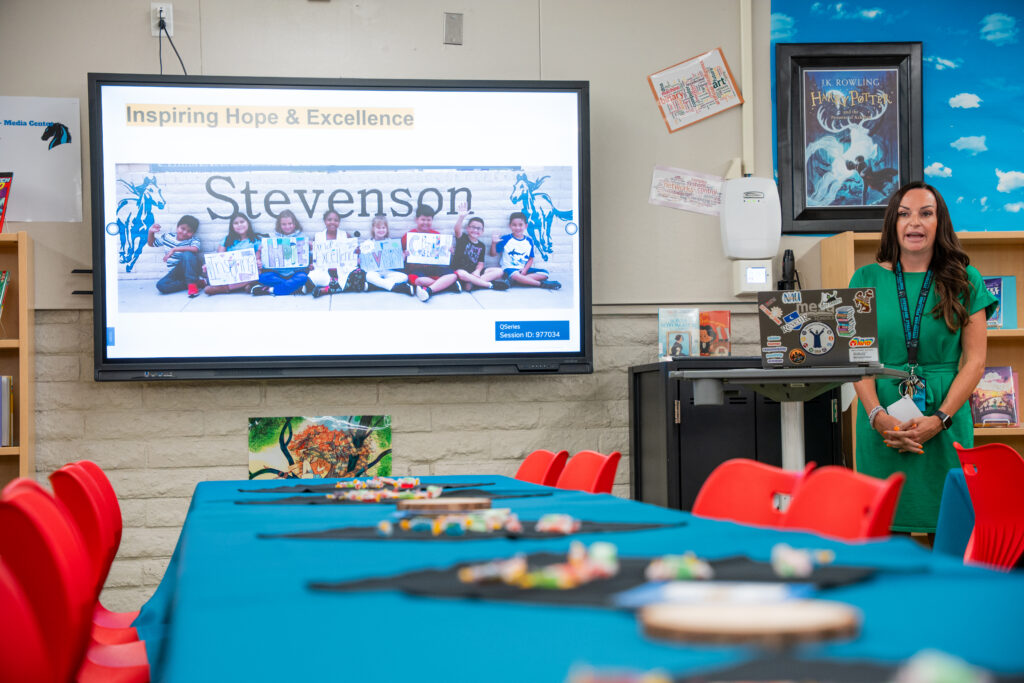
Olson was struck by the leadership and buy-in for the model — from both educators and students — that she witnessed at Stevenson.
“I saw that everywhere. The children were not only engaged in learning, but then we had student leaders give us a tour, which showed strong leadership. When you see that kind of engagement, you know that the system is working,” Olson says.
Building a stronger pipeline for the future

After visiting schools, the North Dakota attendees were introduced to Lead Teacher training modules developed by the Next Education Workforce. The modules guide educators through the skills and strategies they need to lead teams, from inspiring colleagues to navigating the complexities of supporting other educators, and are available on ASU’s Professional Educator Learning Hub.
With the approval from the U.S. Department of Labor secured, 10 educators in the Fargo Public Schools District are participating in the pilot program, completing 10 courses and demonstrating their learning by earning micro-credentials aligned with the competencies of the role. Then, in 2026-27, Matzke’s office plans to place Lead Teacher apprentices in schools, where they will work alongside experienced Lead Teachers before moving into the roles themselves.
The Lead Teacher Registered Apprenticeship, Matzke says, helps strengthen their education workforce pipeline and other programs the department is implementing. This year, five high schools are piloting a new Educators Rising program in the state, with the goal of having students who complete the program able to become paraprofessionals in schools right after graduation. Then, they would enter into the state’s Para-to-Teacher program, which would pay completely for their education degree, already equipped with classroom experience.
“Our goal is to create a continuum in the education field so that we can constantly be growing teachers and providing our teachers and future teachers with opportunities and stepping stones to further their careers,” Matzke says.
Eidsness is hopeful that the program will help with teacher retention.
“Putting it all on one person is too much, and that by using the strengths of a team, we’re able to meet the needs of the whole student body,” Eidsness says. “I’ve always felt that every student probably has that one year that was a wonderful year for them. But what could really happen with learning if we could string together multiple wonderful years? I think that is going to take collaboration and work within a building, and it cannot be left up to an individual in a room that closes the door.”

Matzke agrees:“ Who wouldn’t want to be supported by a team of their peers and have collaborative planning time? What we heard from the teachers today is that the parents absolutely love this model: They love the fact that there are multiple teachers in the classroom to help their child. It is literally a win-win for everybody. The students win. The teachers win. The parents win. So it’s exciting to think about where this could lead.”