Category: Partner stories
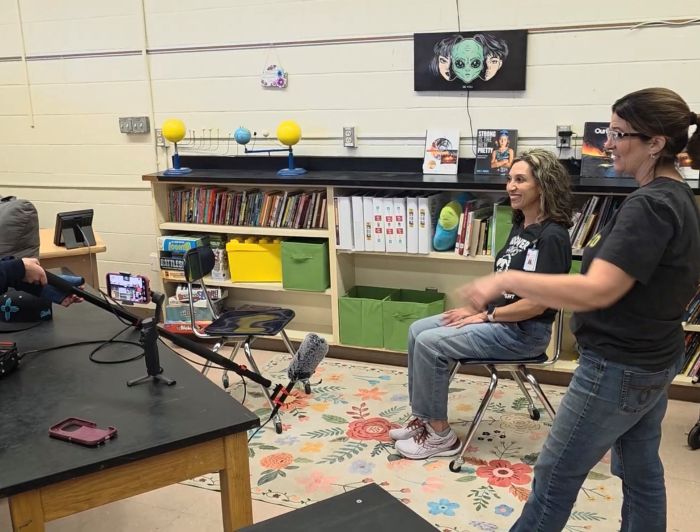
‘A hallmark of high success’: How Hoover Middle School is embracing interdisciplinary learning and collaborative team planning time through team-based models
Hoover Middle School was one of six schools within Albuquerque Public Schools in New Mexico to launch team-based strategic school staffing models in 2025. In this story, Hoover’s leaders and four educators on the 6th-grade team — whose experiences span from one year to over two decades — share on their takeaways from their first year teaming and how the model is working to ensure that “no student falls behind.”

When teams and curriculum move together: Early lessons from ITEL AZ
Early lessons from ITEL AZ demonstrate how educator teams and high-quality instructional materials can work together to strengthen grade-level instruction.

‘A night-and-day difference:’ Educators share how teaming has changed their schools for the better
Four educators from across the country shared how teaming shapes their day-to-day work in a session entitled “A Conversation With Educators Working in Next Education Workforce Models” during the 2026 Strategic School Staffing Summit.

A national first: North Dakota’s new approach to team-teaching
North Dakota became the first state in the nation to be approved by the U.S. Department of Labor for a new Lead Teacher Registered Apprenticeship, building upon the state’s pioneering efforts to strengthen its education workforce pipeline.
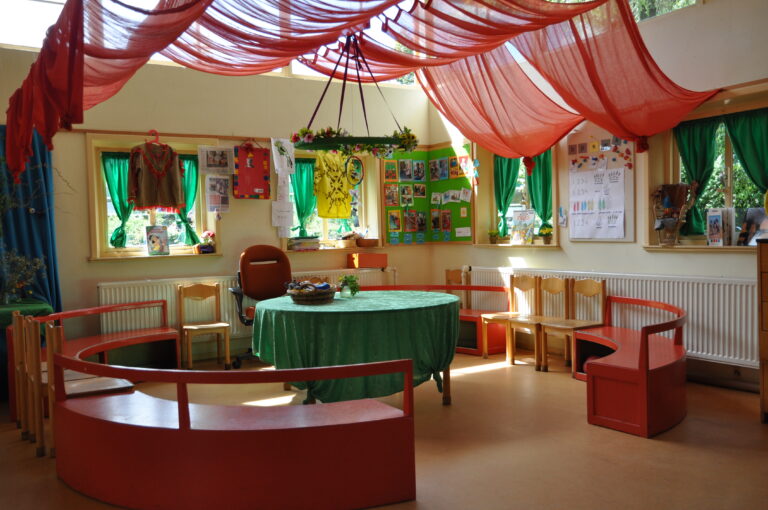
Dutch ingenuity in education: Building educator teams with purpose
Dating back to the early 20th century, the Dutch have approached schooling not as a fixed structure, but as something that can — and should — be shaped by purpose. Saxion University of Applied Sciences’ partnership with ASU and the Next Education Workforce™ marks a new chapter: one where Dutch and American educators learn from each other.

How teaming helps freshman transition to high school
Team-based school staffing models at Mountain View High School are helping students succeed and attracting educators to the Arizona high school. Learn more in a short video from 12News.
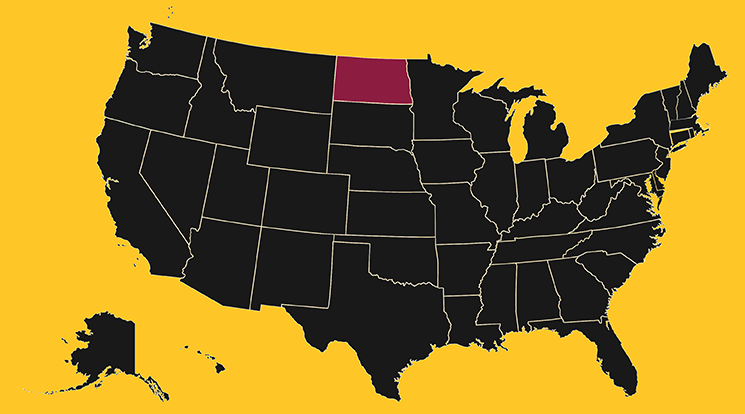
Creating new educator pathways in North Dakota
North Dakota has become the first state to secure approval from the U.S. Department of Labor for a new apprenticeship program for teacher leaders, a project developed with the support of Arizona State University’s Next Education Workforce™ initiative.
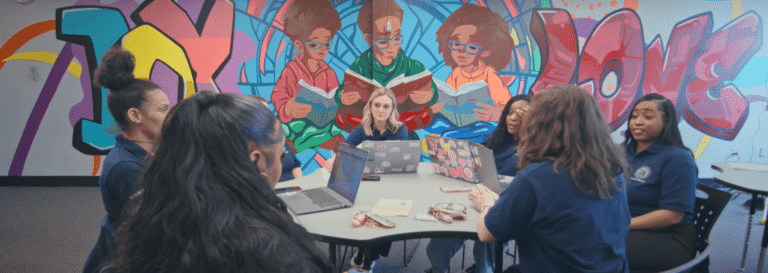
See teaming in action at the Detroit Academy of Arts and Sciences
In a short video, educators and leaders at the Detroit Academy of Arts and Sciences share how they’re redesigning roles, collaborating in new ways and building stronger support systems for students and teachers alike through Next Education Workforce™ team-based models.

Bringing team-based teaching to the Midwest with the Michigan Educator Workforce Initiative
Pilot teams at schools in Concord, Michigan, and the Detroit Academy of Arts and Sciences are part of a broader initiative supporting schools as they explore, design and implement team-based staffing models, through a partnership between Arizona State University’s Next Education Workforce™ and the Michigan Education Workforce Initiative, launched in spring 2024.
From skeptic to advocate: One parent’s perspective on teaming
Jennie Clausen, a parent of three kids at Hermosa Vista Elementary School in Mesa, Ariz., was once strongly opposed to the school’s move to team-based staffing models. Now, she’s a proud self-proclaimed “teaming convert.”

Seeing is believing: How Arizona site visits are driving expansion of Next Education Workforce models nationwide
Nearly 70 educators and school and system leaders attended the Next Education Workforce™ initiative’s November Site Visit, joining a growing number of out-of-state, and even out-of-country, educational innovators coming to Arizona to see team-based strategic school staffing models in action. And the reason they can come see these models in action can be attributed largely to the Mesa Public Schools district that decided to take a big step forward in transforming how it supports its students and educators.
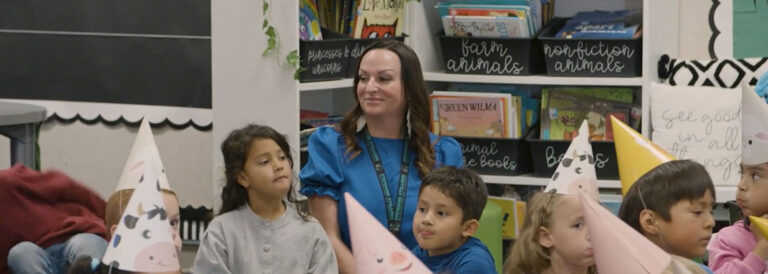
School and system leaders on the shift to strategic school staffing
School and system leaders share their experiences launching team-based strategic staffing models in new Next Education Workforce™ Virtual Site Visits videos.

Experience innovative team-based staffing firsthand with Virtual Site Visits
Next Education Workforce’s Virtual Site Visits allow participants to watch three innovative, team-based school staffing models in action.
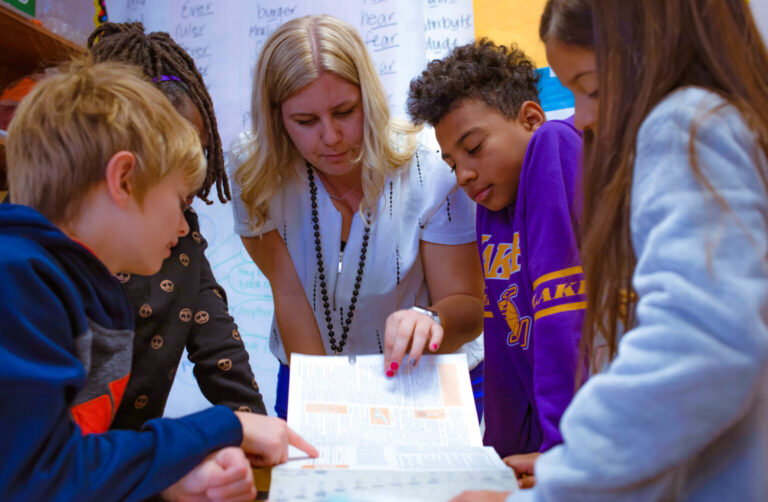
How teams are improving teacher job satisfaction and student academic support in Mesa, Ariz.
What happens when leaders and educators implement innovative, team-based staffing models in their schools and systems? Next Education Workforce™ models fundamentally redesign the one-teacher, one-classroom model to deepen and personalize learning for all students and improve working experiences for educators.

Team teaching model is associated with higher job satisfaction for educators
Compared to other teachers in the same district, teachers that participate in Next Education Workforce™ team-based staffing models are more likely to say they would recommend teaching as a profession and plan to still be teaching in five years. These teachers on teams also received higher teacher evaluation ratings than non-teamed teachers.
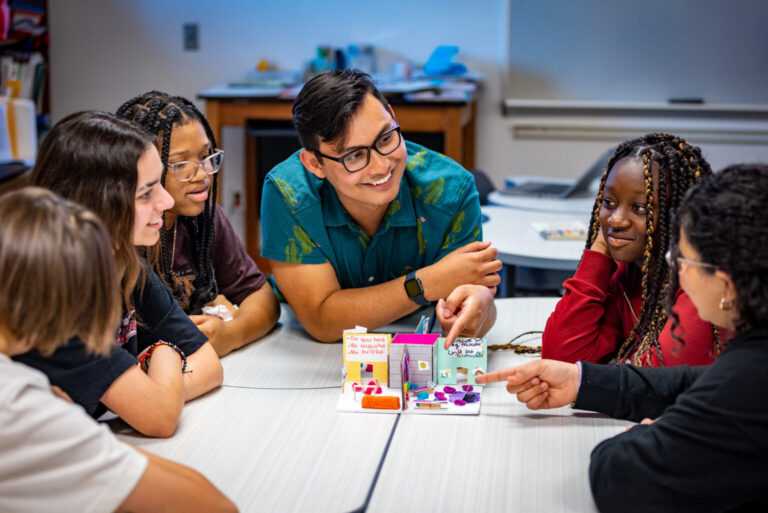
Crossing the chasm: How one district is moving its innovative staffing model from pilot to mainstream
To transition pilot programs into core school system operation, leaders need the support of staff members who may not jump at the chance to innovate.

Q&A: The multi-year life-changing work of building a Next Education Workforce school
Tom Fletcher serves as the principal of Ronald Reagan Elementary School in Yuma, Ariz. Reagan Elementary has begun to implement Next Education Workforce team-based staffing models, which has required buy-in from educators, students and parents, as well as some creative problem solving.

‘Being on a team has made me blossom’: Lessons learned from Next Education Workforce site visits
Next Education Workforce™ site visits give leaders across the educational landscape who are interested in exploring and implementing team-based staffing models an opportunity to see them in action. Attendees are also able to speak directly with principals and educators who have designed team-based models for their specific context and attend educator and student panels.

Understanding the career aspirations of paraeducators in Mesa Public Schools
In school districts across the country, paraeducators may be referred to as teacher aides, teacher assistants or instructional aides. They’re all individuals who work in schools under the supervision of a licensed educator and provide support to teachers and students. They may work with students to reinforce learning, implement behavior intervention plans or work closely with school nurses to support students’ medical needs. They may lead small reading groups or assist in planning mini-lessons with their lead teacher. Some are working towards becoming licensed educators. In Arizona and states around the country, they might also be a part of a Next Education Workforce ™ team-based models, where their skills are strengthened through collaboration.
Q&A: Building the Next Education Workforce in rural Colorado schools
With the assistance of an Opportunity Now grant, rural Colorado schools will be able to explore teaching in team-based models with the Next Education Workforce™ initiative at Arizona State University’s Mary Lou Fulton College for Teaching and Learning Innovation. Here, Andrea LaRocca, senior program manager for the Next Education Workforce, shares how teams of educators with distributed expertise can be more effective, support equity and improve learning outcomes. Learn more about the model and how rural Colorado schools can access resources to get started.